Jining Intelligent Cockpit
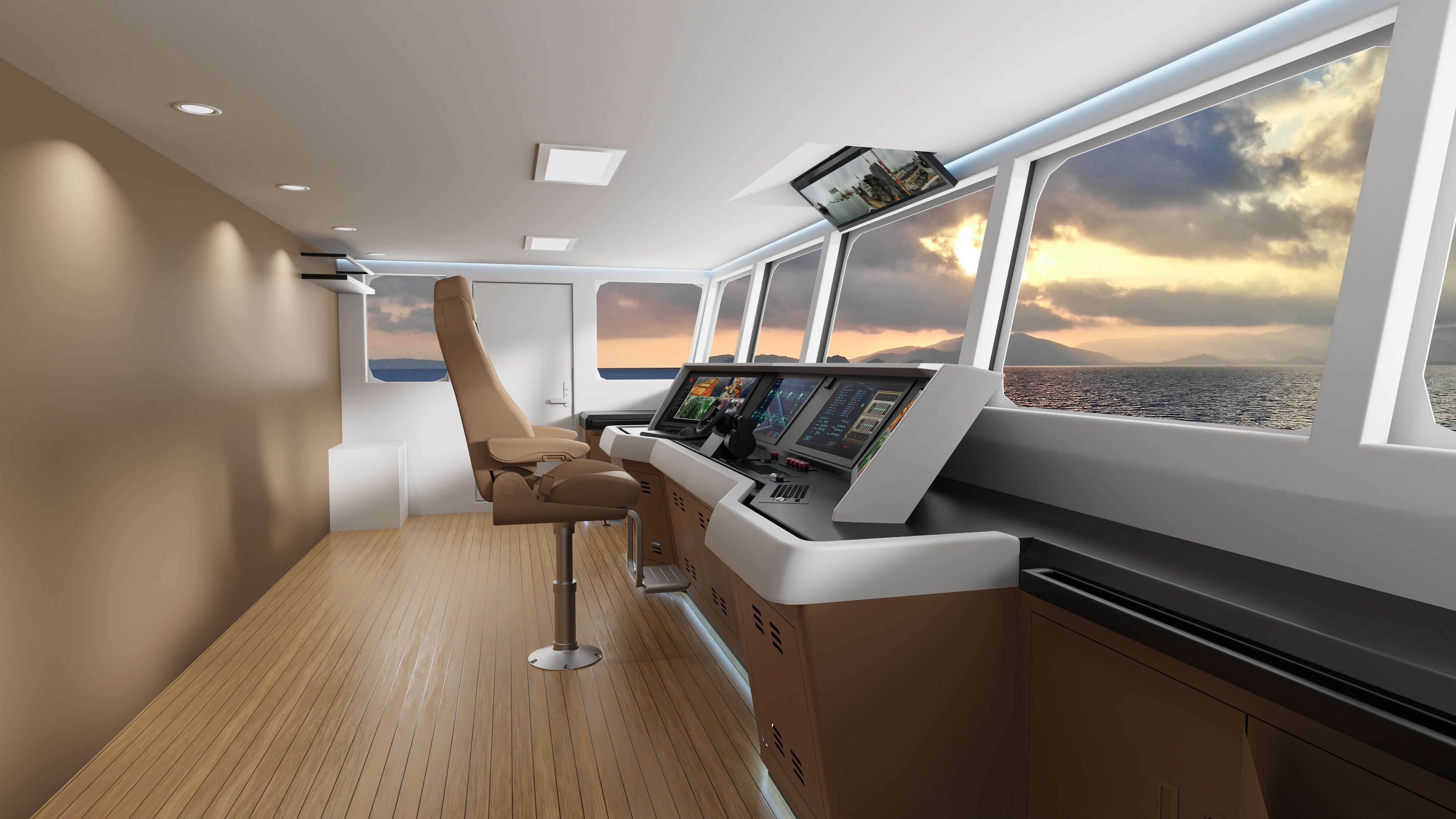
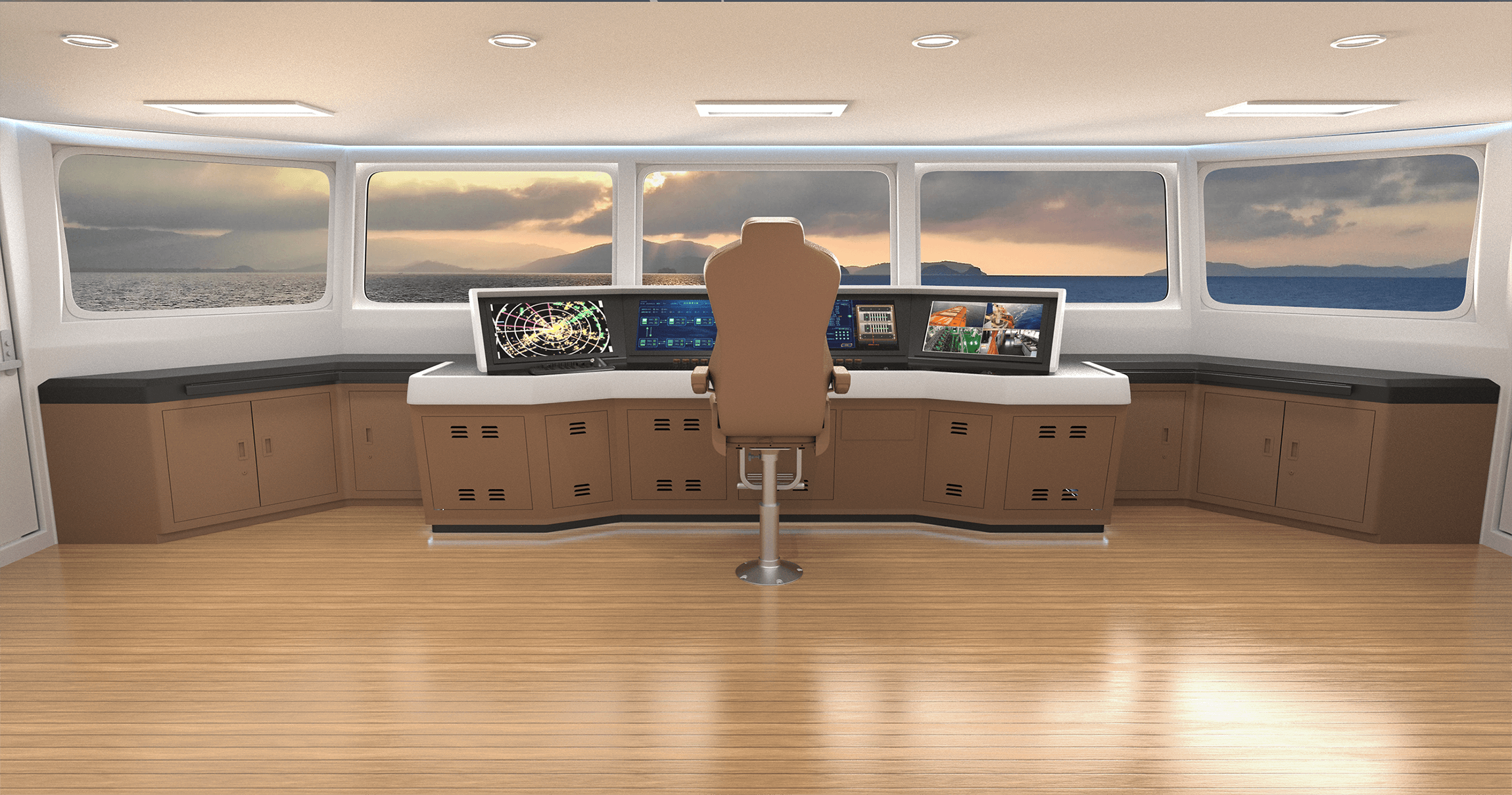
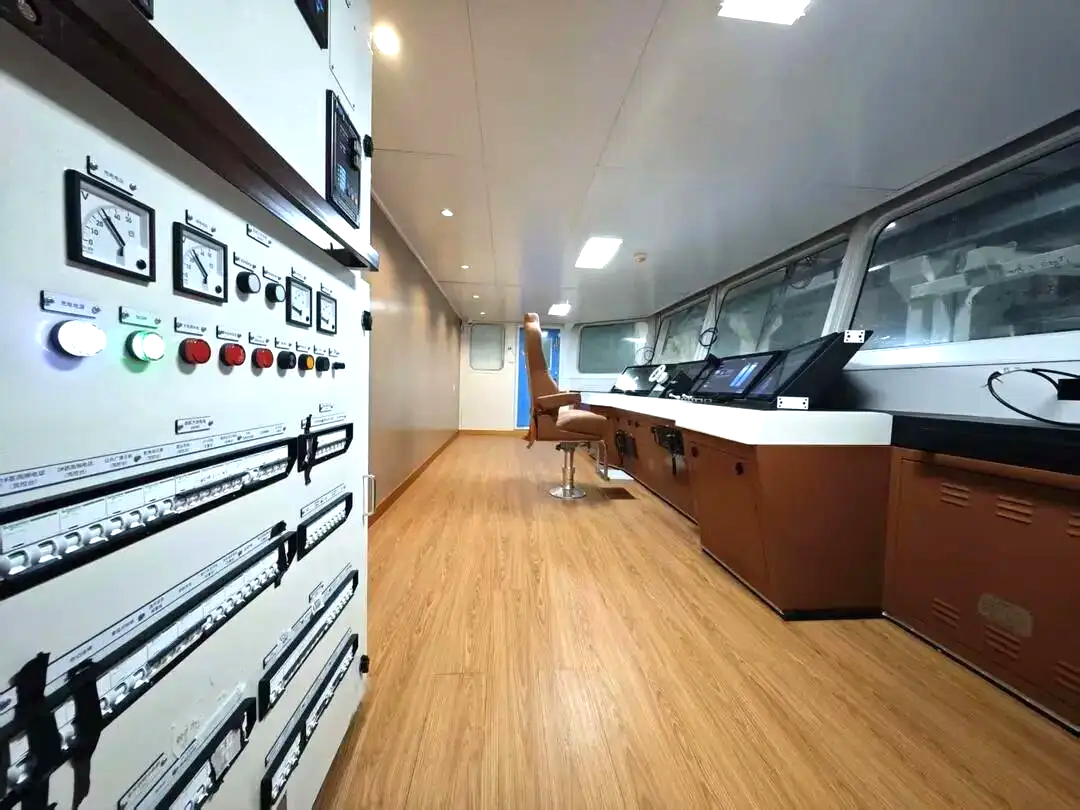
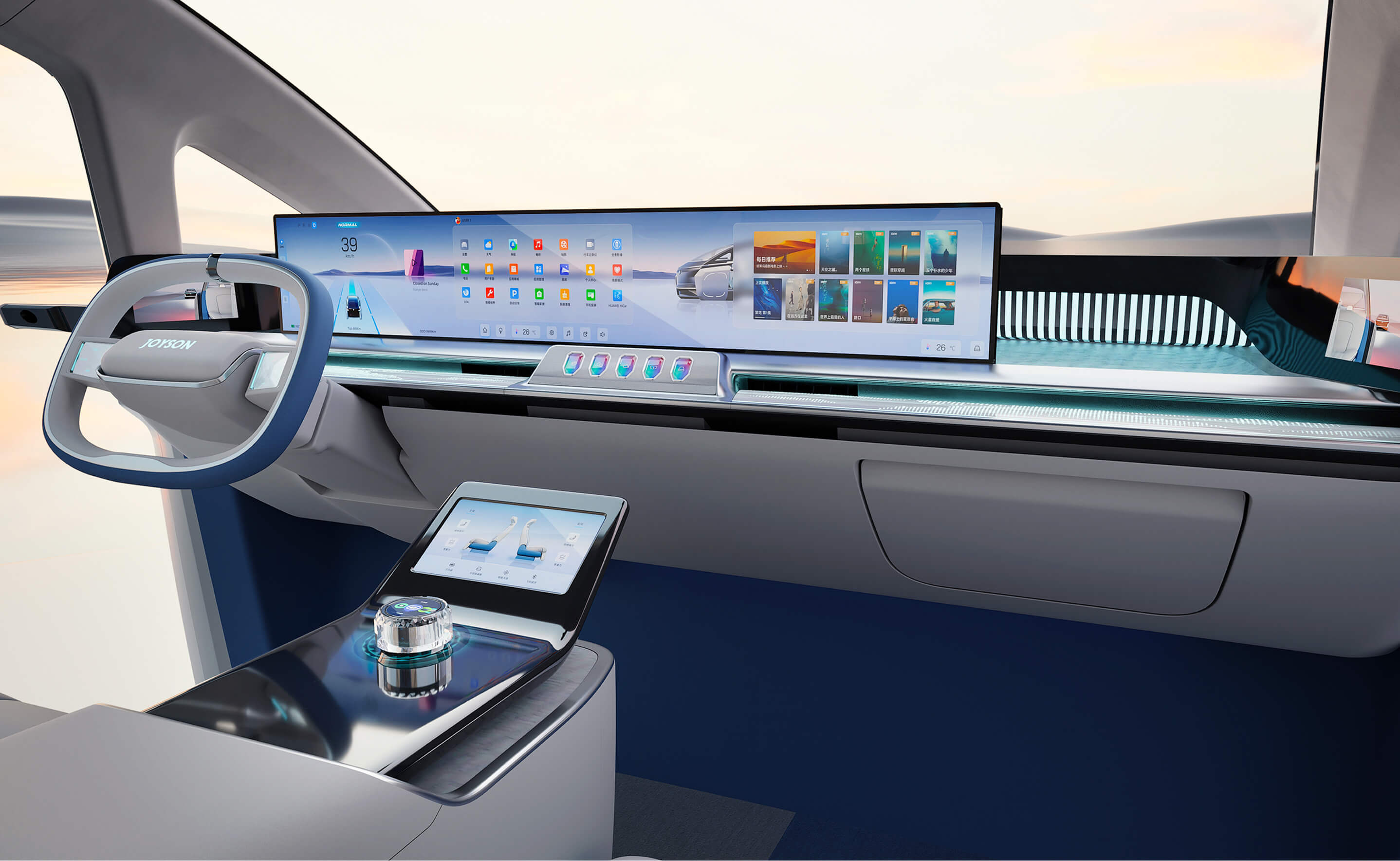
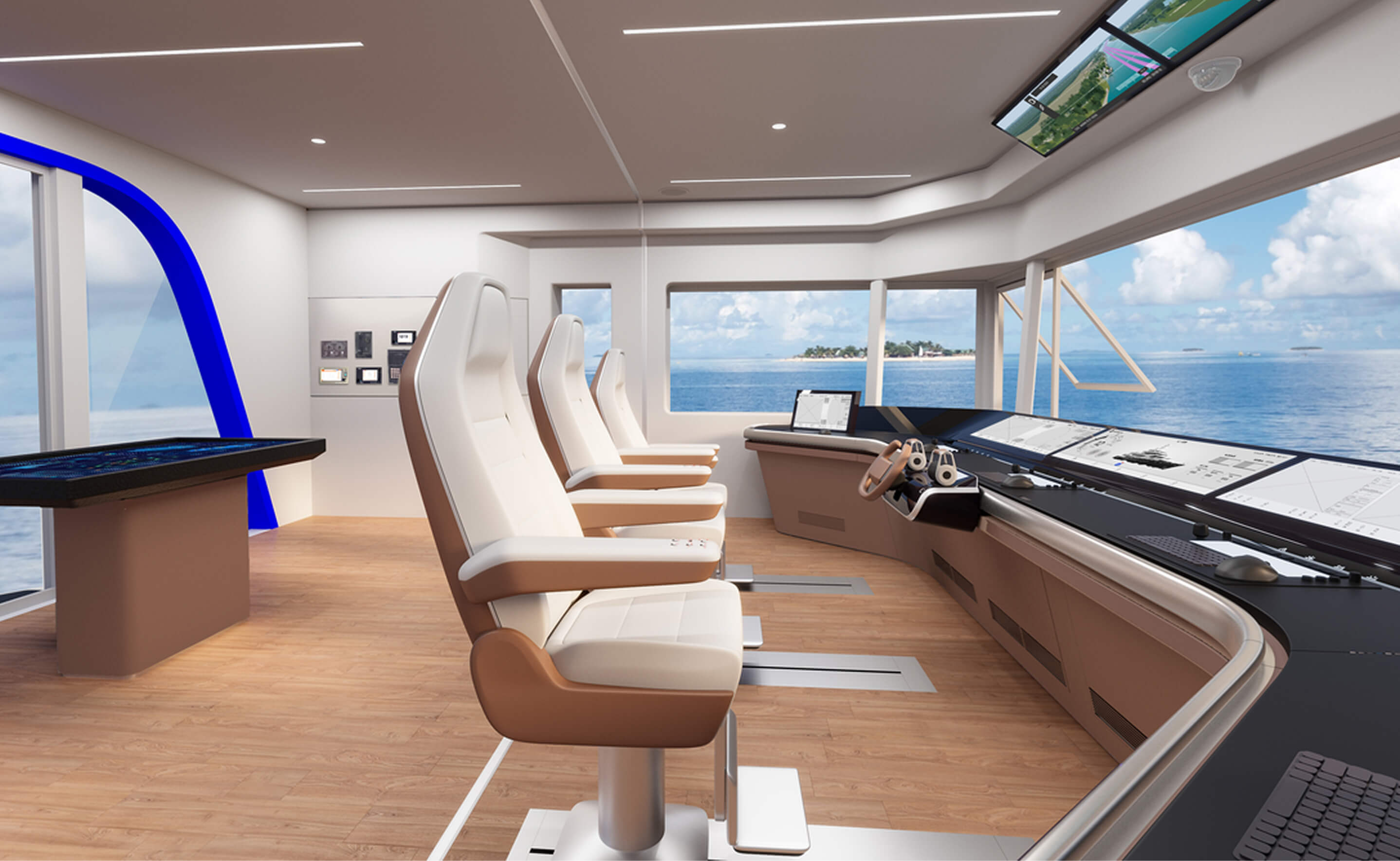
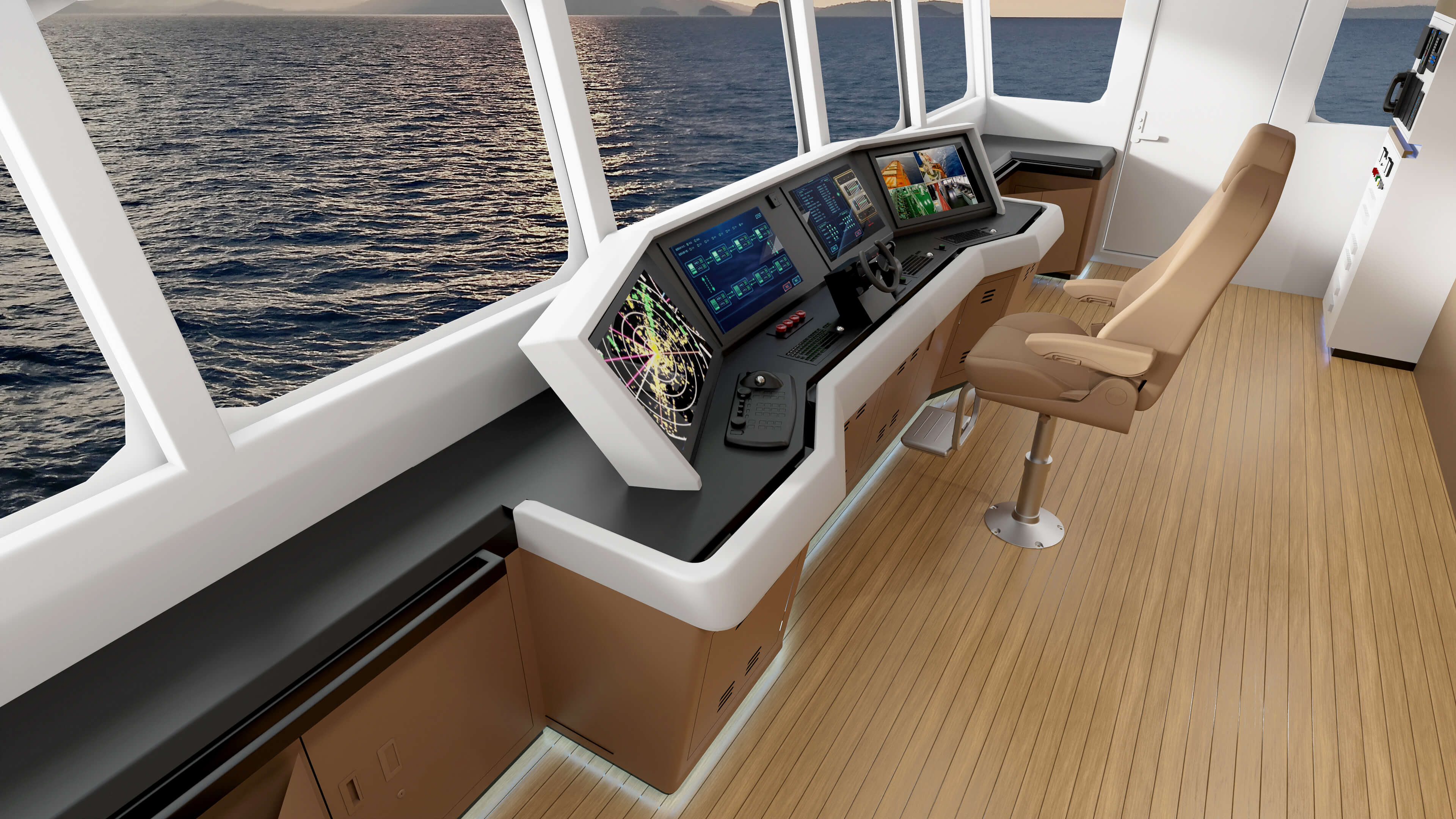
In the aspect of space and human - factors design, the intelligent cockpit centers around the long - term navigation scenarios of crew members, emphasizing operational accessibility, information readability, and environmental comfort. By integrating scattered control devices, the cockpit console becomes more concise, and key devices and the core operation area are more concentrated, which helps reduce the crew's line - of - sight shifts and repetitive operations during navigation.
In terms of visual and spatial expression, the intelligent cockpit weakens the industrial and fragmented feeling of traditional ship cockpits. It adopts a more technological and holistic spatial language to relieve the crew's fatigue during long - term navigation. There are ingenious designs in the details. The hidden handrails on the console frame combine practicality and aesthetics. The adjustable multi - function seats conform to ergonomics, and the surround - type control layout makes core operations easily accessible, truly implementing the "human - centered" concept.
In the aspect of interaction and function integration, the intelligent cockpit uses multi - screen display and HMI (Human - Machine Interface) interaction design to present information on navigation, equipment, alarms, videos, and auxiliary decision - making in a centralized manner. We have re - engineered the HMI interaction logic and integrated the ship's core systems to achieve "one - screen overview, one - button control, and one - network collaboration", covering all scenarios such as navigation, monitoring, alarms, and auxiliary decision - making.
By integrating data from devices such as AIS (Automatic Identification System), Beidou Navigation Satellite System, and depth sounders, the navigation information and ship status are presented in a centralized way, enabling integrated management and control of auxiliary equipment and video monitoring. Through functions such as situation awareness, safety monitoring, intelligent interaction, and intelligent assistants, the cockpit can provide more timely and intuitive auxiliary information for the crew, improving the efficiency of daily operations and the ability to ensure navigation safety.
The key to ship intelligentization is not just the upgrade of single - point functions, but whether the data can be continuously accessed, managed, reused, and expanded. We have built a full - link data management system for the intelligent cockpit. Through unified collection, protocol adaptation, and standardized processing of data from ship - end devices, it provides basic support for subsequent applications such as assisted driving, remote maintenance, intelligent alarms, energy consumption analysis, and ship - shore collaboration.
On the edge side, the system can deploy edge computing and local data processing capabilities according to project configurations, and conduct timely analysis and provide prompts for key navigation information, equipment status, and safety risks. On the shore - based side, by connecting to the ship - shore collaboration platform, it provides a data channel for remote maintenance, status monitoring, dispatching management, and operational analysis. As the application scenarios continue to expand, the data foundation will also become an important basis for the full - life - cycle management of ships and the continuous iteration of intelligentization.